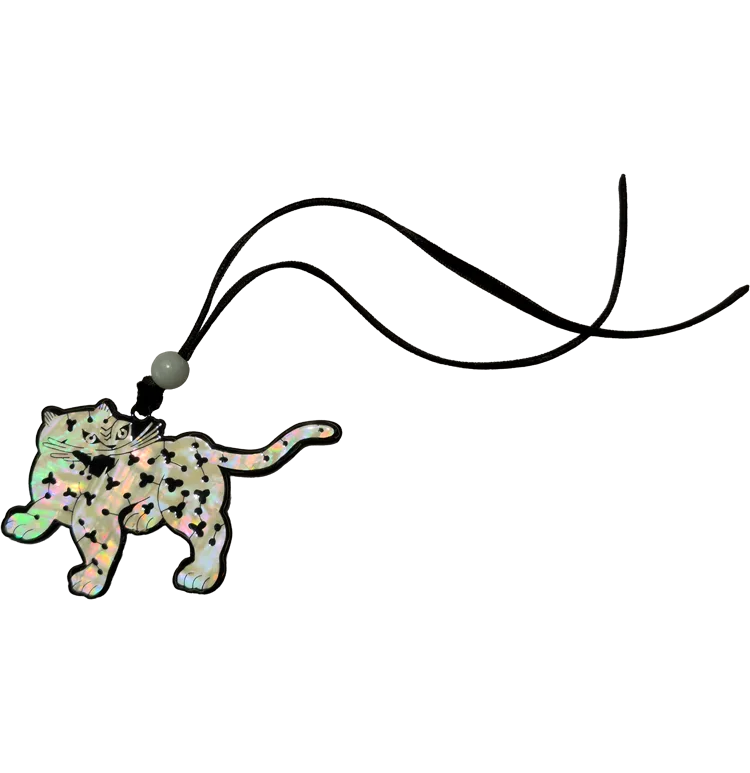
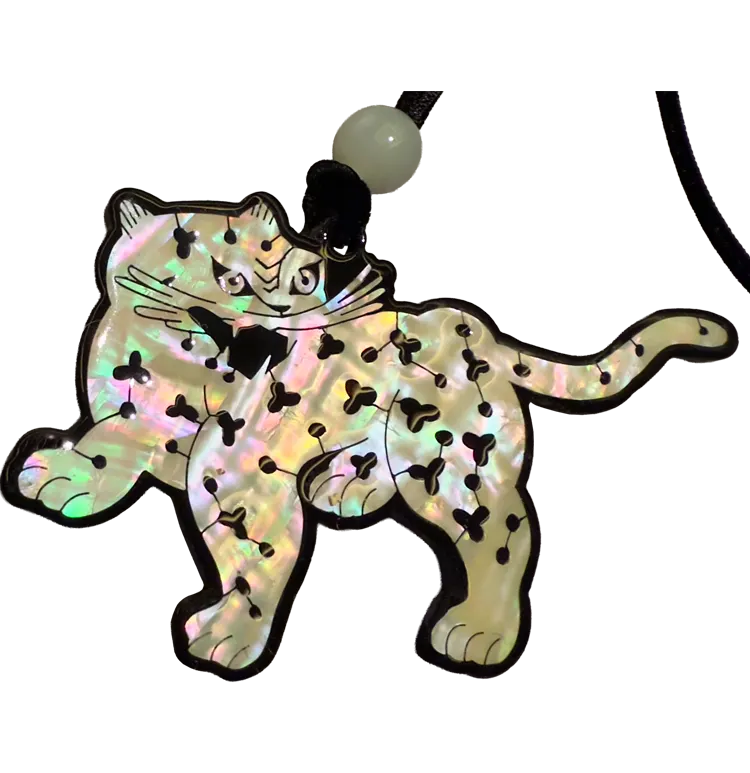
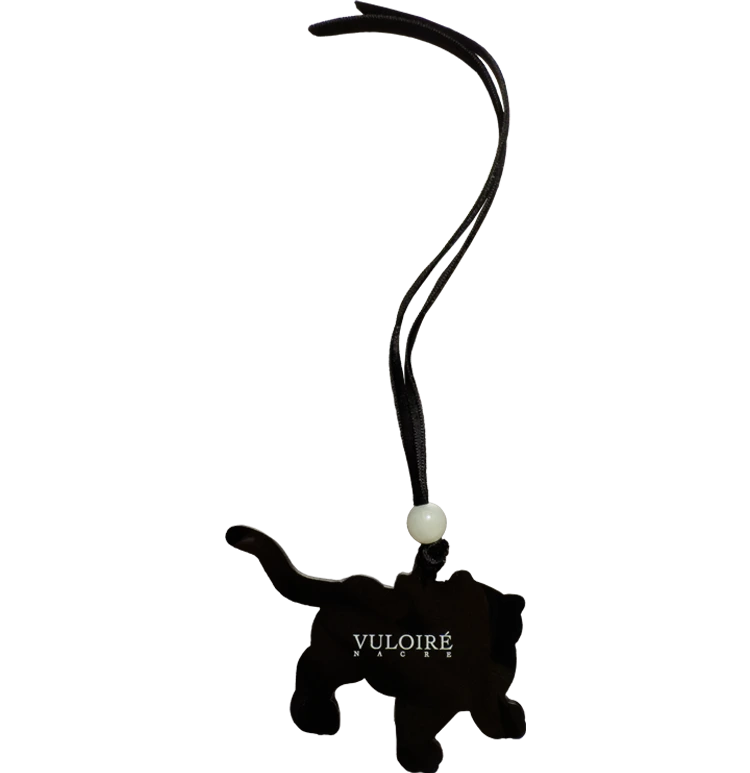
Vuloiré launches its nacre goods with six nacre charms, each crafted from natural mother-of-pearl and cut, inlaid, coated, and finished entirely by hand. In Korea, nacre—jagae—has long adorned royal objects, furniture, and ceremonial accessories, prized for its quiet luminosity and depth. Each charm reveals the natural iridescence of mother-of-pearl, shifting in color with movement and light.
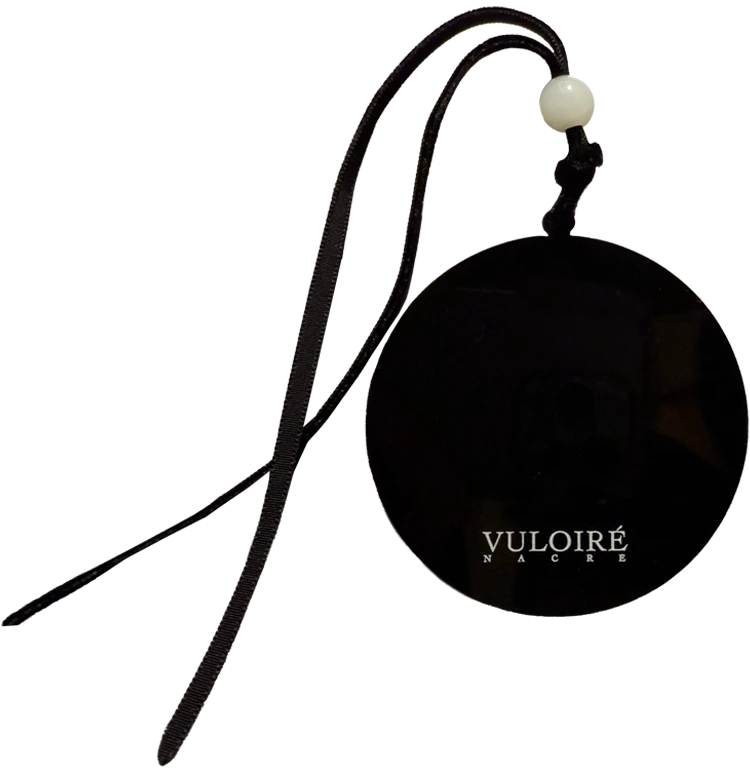
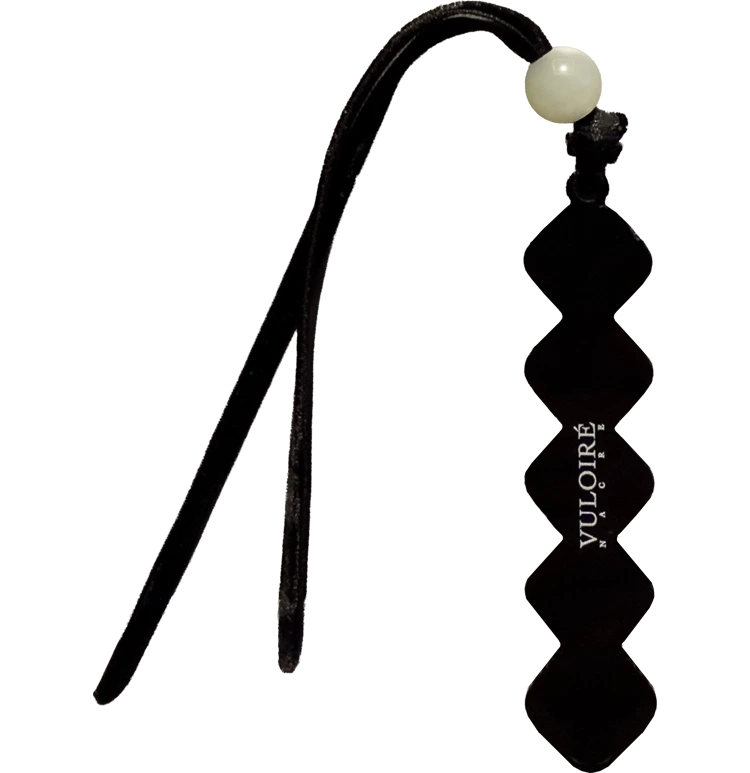
Finished with a velvet cord and an authentic Korean jade bead, the charms are designed to be worn daily—on bags, keys, or garments—rather than displayed. Traditionally, jade was believed to possess the power of byeoksa, warding off negative forces and misfortune, which is why it was carried close to the body or attached to personal objects. Its presence lends each charm a sense of gravity—one that is felt rather than seen—bridging heritage craftsmanship with modern life.
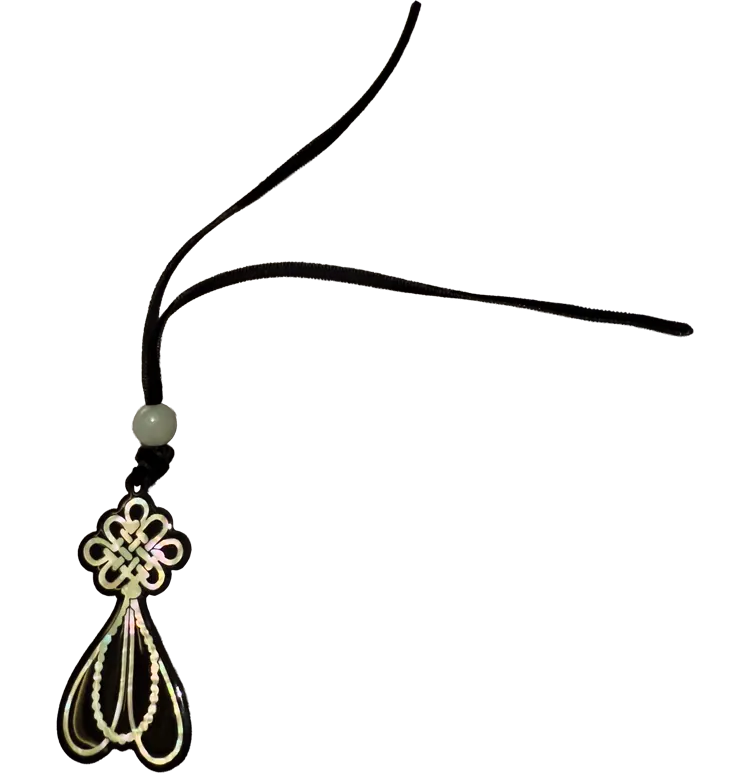
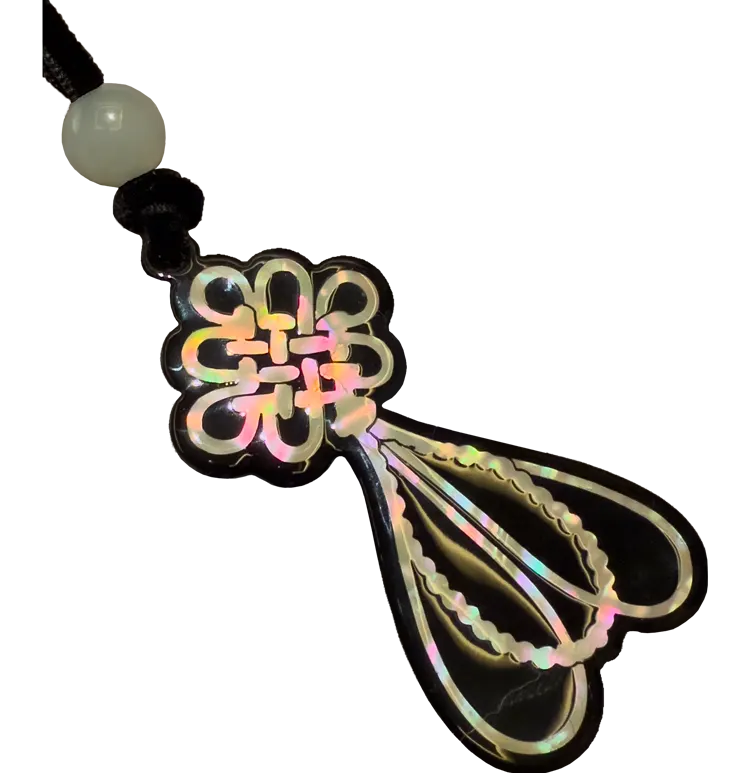
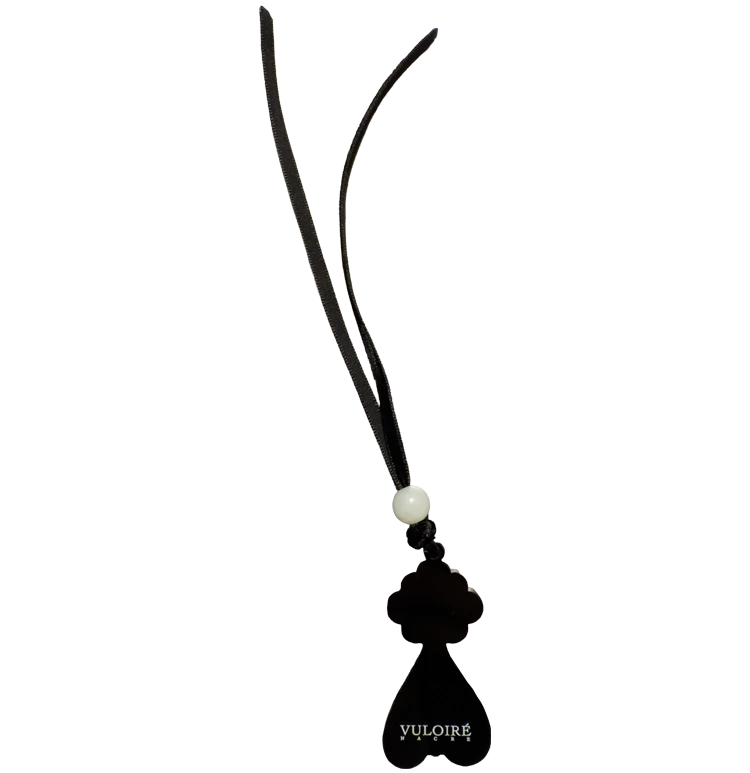
Korean traditional knots, maedeup, originated not as ornament, but within Buddhist ritual and visual culture. Early forms developed alongside temple decoration and ceremonial objects, where knots embodied continuity, discipline, and the binding of intention through repeated, meditative action. Over time, maedeup moved beyond the temple into court attire, ceremonial garments, and personal accessories, functioning as silent carriers of meaning rather than overt decoration—often marking rites, offerings, and moments of passage.
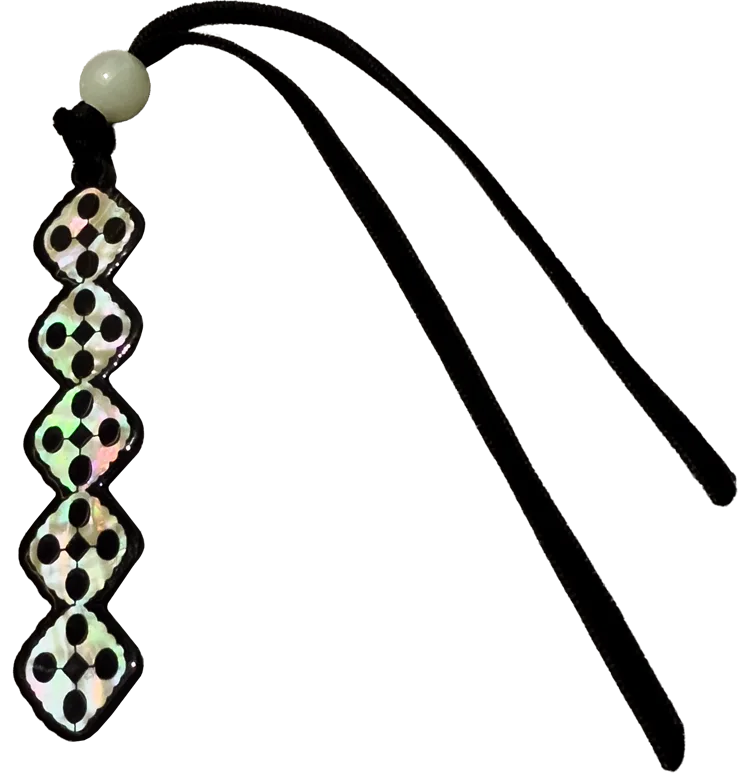
Among these forms, Gukhwa maedeup (chrysanthemum knot) is defined by constancy and disciplined endurance—qualities long associated with the chrysanthemum in Korean tradition. Vuloiré’s Knot charm draws directly from this structure, translating its balanced geometry into a refined, symmetrical form carved in natural nacre.
The motif originates from the knot developed for Haute Heritage Look #5, Peacock, where it first appeared as a defining element within the couture composition. In the couture garment, the knot is articulated through individually placed nacre beads, forming rhythmic points of tension and release across the surface. In the charm, these bead elements are translated into carved circular impressions within the mother-of-pearl, preserving the visual cadence of the original beadwork while shifting from textile to solid form. Interlocking lines loop continuously without a visible beginning or end, expressing continuity achieved through balance rather than excess.
The form remains deliberately restrained, allowing the iridescence of mother-of-pearl to reveal depth through movement rather than ornament. Created exclusively in connection with Vuloiré’s 2026 Haute Heritage Collection, the Knot charm functions as a quiet emblem rooted in ritual logic. Its recurring presence across the house’s work serves as a mark of recognition—subtle, consistent, and understood rather than announced. Designed to be carried daily, it represents connection, endurance, and the elegance of something bound not by force, but by intention, repetition, and discipline.
Bullocho refers to the mythical herb of immortality in Korean and East Asian tradition. Believed to grow only in sacred, hidden realms, it has long symbolized longevity and freedom from decay—an aspiration for life beyond the limits of time. In Joseon-era paintings and royal screens, Bullocho appears as a spiritual motif, embodying continuity, renewal, and eternal life.
Vuloiré’s Herb of Immortality charm reinterprets this motif as a fluid, organic form carved in natural nacre. The design is drawn directly from an embroidery motif used in Vuloiré’s 2026 Haute Heritage Look #3, Five-Clawed Dragon, where it appears alongside the golden dragon as a symbol of eternal life bestowed by divine authority. Translated from couture embroidery into mother-of-pearl, the motif retains its meaning while shifting scale and medium.
Produced as a collectible object, the Herb of Immortality charm extends the couture narrative beyond the garment. Designed as a modern talisman, it represents longevity, protection, and the enduring aspiration for life unbound by aging.
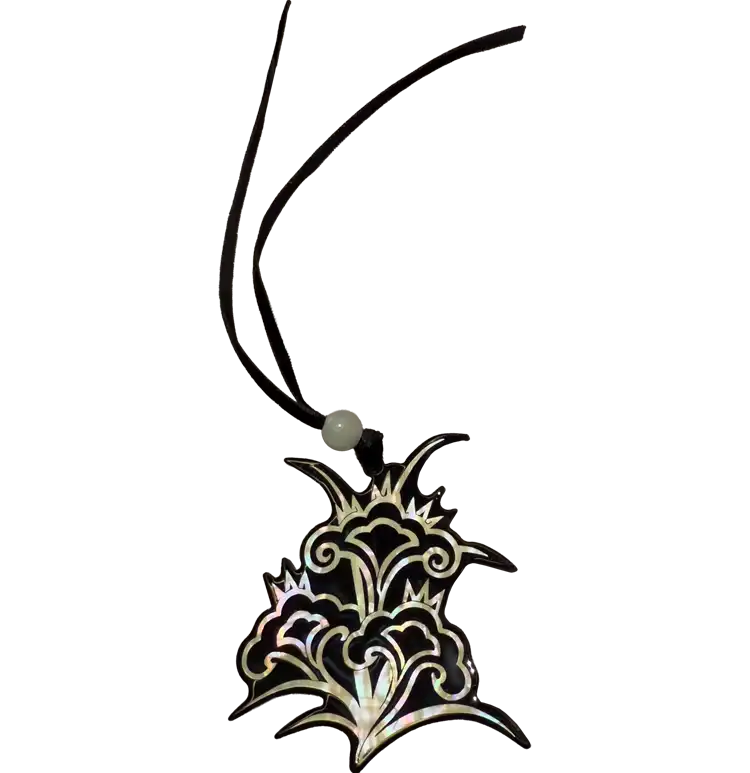
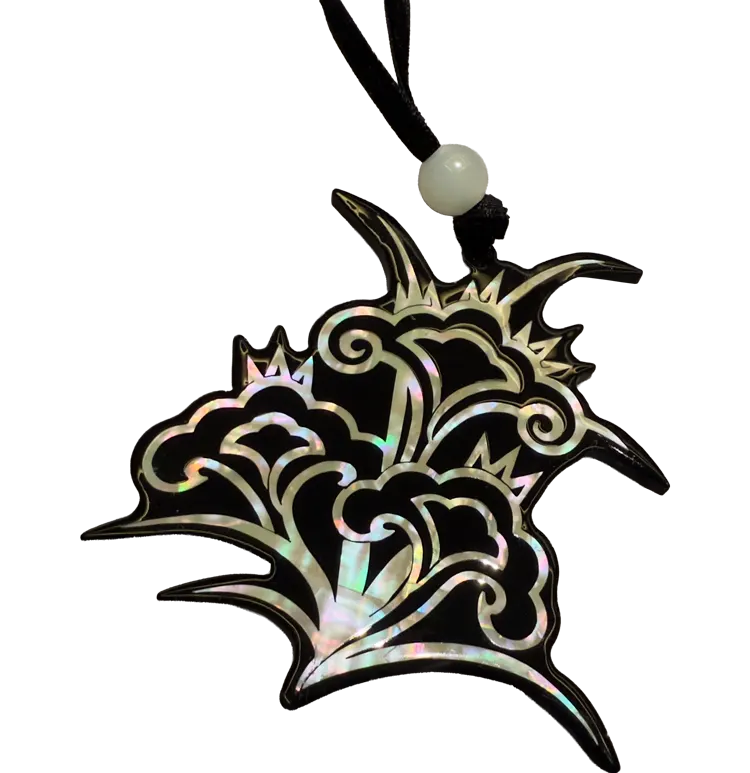
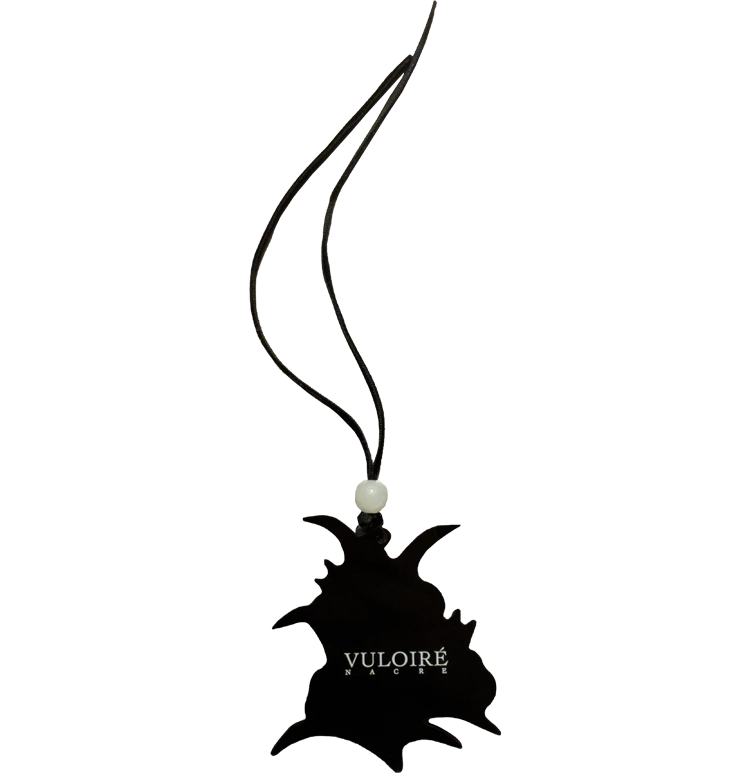
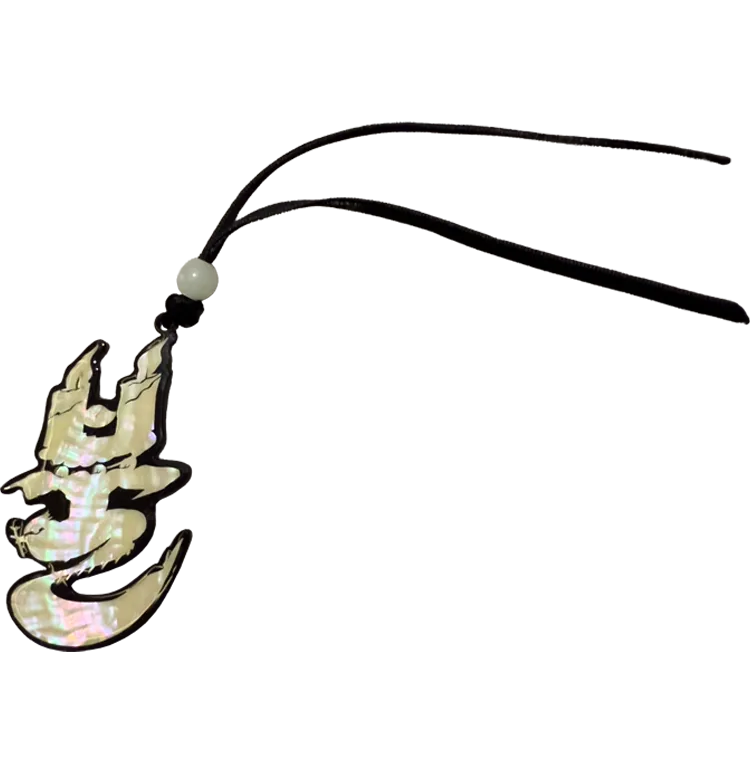
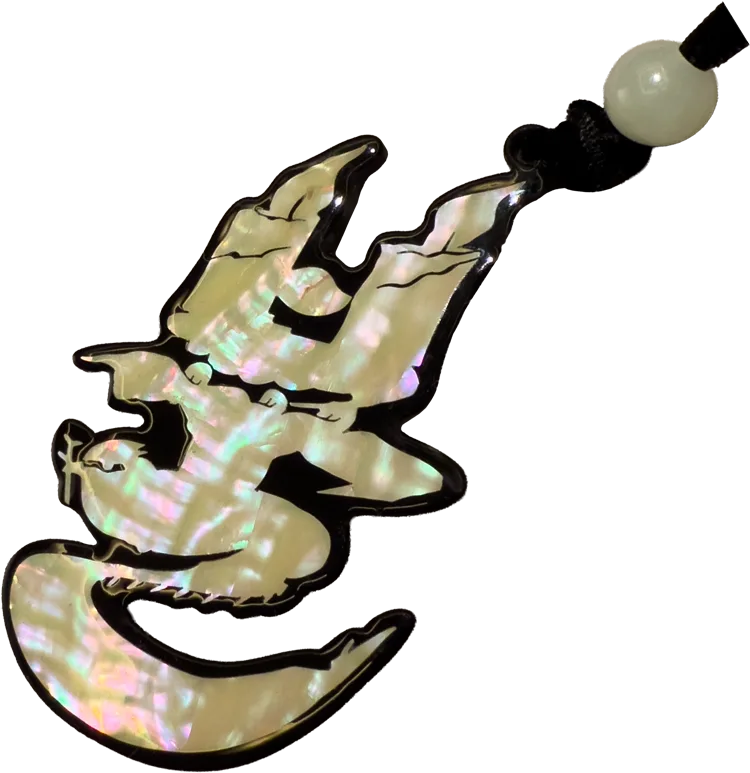
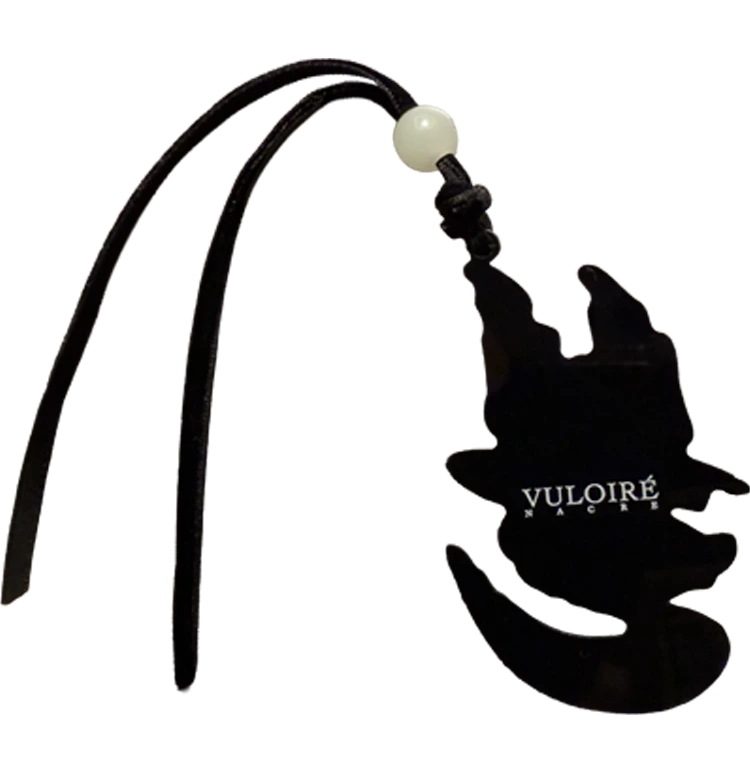
Fire has long been understood in Korean tradition as a force of life rather than destruction. It represents vitality, transformation, and the energy through which renewal becomes possible. Through fire, life and authority are made visible and ordered.
Vuloiré’s Fire charm is centered on the single hangul character “불”, written exclusively for Vuloiré by 101-year-old hyukpil (leather-brush calligraphy) calligrapher Nam Sang Jun. This character was originally written as part of Vuloiré’s Hangul name—불로래—, and later isolated and reinterpreted as an independent form. While the character “불” in Vuloiré originates from the negation bu (不), meaning “not,” it was reinterpreted here through its phonetic and visual resonance with fire—transforming absence into ignition. Executed through the disciplined force of hyukpil, the character embodies fire not as image, but as action. The brushwork captures ignition, momentum, and restraint in a single gesture, transforming language into living form.
Carved in natural nacre, the calligraphic form rises and unfolds in an ascending motion, translating written fire into material energy. Its iridescent surface shifts with light, echoing the belief that fire is never static, but continuously revealing itself. Created in the Year of the Red Horse—a year traditionally associated with heightened vitality, creation, and irreversible momentum—the Fire charm exists as both a temporal marker and a modern talisman.
Produced exclusively in connection with Vuloiré’s 2026 Haute Heritage Collection, it represents life force, transformation, and the resolve to move forward once ignited.
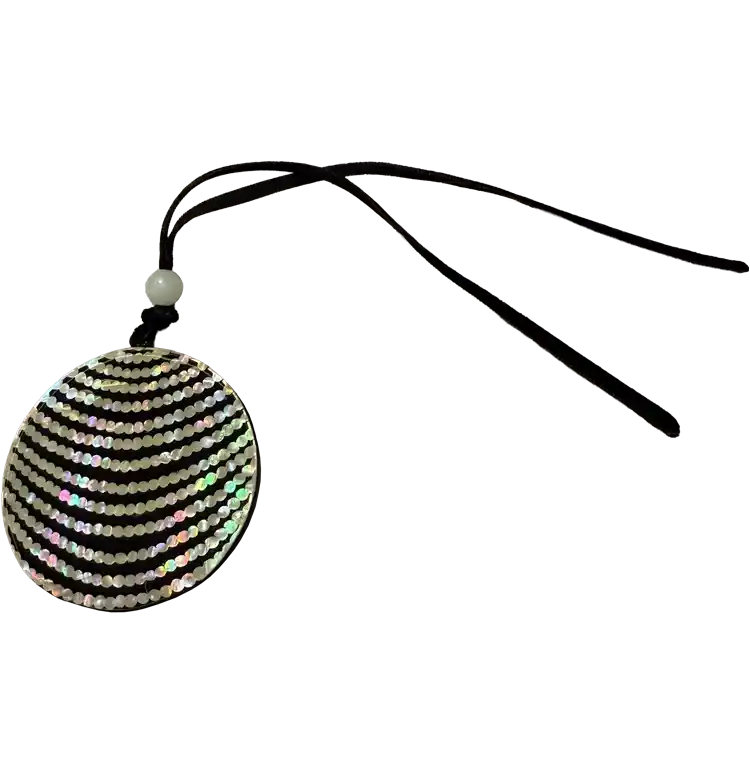
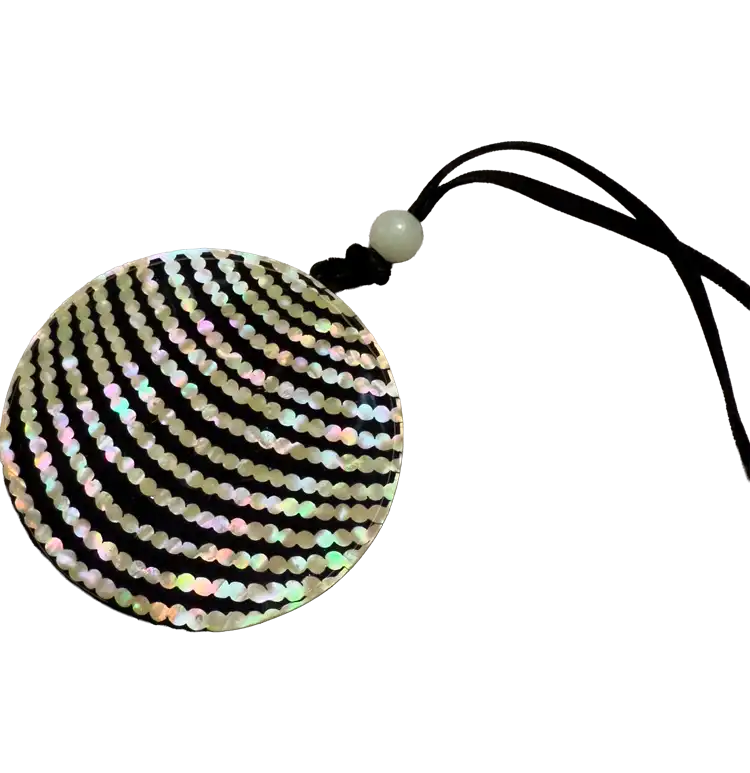
In Korean decorative tradition, ornamentation was never purely ornamental. Repetitive patterns, circular forms, and measured rhythms symbolized order, continuity, and harmony—principles believed to bring stability and balance to both space and life. Such motifs appeared frequently on royal objects, furniture, and architectural details, where repetition itself carried meaning.
Vuloiré’s Ornament charm translates this philosophy into a restrained, circular form. Conceived during the Christmas season, the design draws from the image of a traditional ornament—reimagined through strands of pearl necklaces arranged in rhythmic sequence. Bands of mother-of-pearl are inlaid across a dark ground, creating a visual cadence that shifts subtly with light and movement. Rather than centering on a single symbol, the design emphasizes repetition itself: time unfolding evenly, without interruption.
Created exclusively in connection with Vuloiré’s 2026 Haute Heritage Collection, the Ornament charm exists as a collectible object rooted in quiet discipline rather than overt symbolism. Designed to be carried daily, it represents continuity, balance, and the understated beauty of order—an object that reveals its presence gradually, rather than all at once.
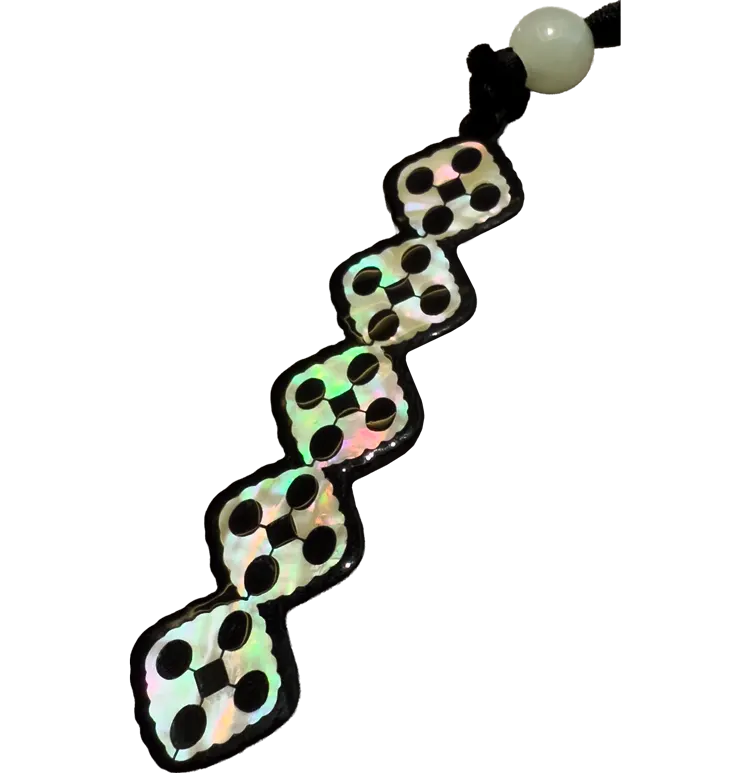
The idea of the royal has long represented the highest state of alignment—authority, refinement, and fortune brought into perfect balance. Rather than excess, it signifies completion: a moment in which power and fate converge without disorder.
Vuloiré’s Royal Flush charm translates this concept into a composed, emblematic form carved in natural nacre. Its design is derived from a central motif used in the tiara of Haute Heritage Look #1, where the same geometry appears as a crowning element within the couture silhouette. Reinterpreted at an intimate scale, the motif retains its symbolic authority while allowing light to move across the nacre with clarity and restraint.
The charm conveys elevation without ornament, presence without force. Named Royal Flush—the highest possible hand in poker—it symbolizes ultimate alignment, when every element falls into place and nothing is left to chance. Created exclusively in connection with Vuloiré’s 2026 Haute Heritage Collection, it exists as a collectible object and modern talisman, representing sovereignty, fortune, and the quiet confidence of reaching the highest hand.
The tiger has long been regarded as one of the most powerful protective symbols in Korean tradition. Appearing in Joseon-era folk paintings, royal embroidery, and guardian imagery, the tiger was believed to ward off evil spirits and protect human spaces, standing as a guardian of mountains and the natural world. Unlike ferocious depictions elsewhere in Asia, the Korean tiger often embodies restrained strength—alert, dignified, and quietly formidable
Vuloiré’s Tiger charm reinterprets this guardian figure through a stylized, forward-moving form carved in natural nacre. The tiger motif is drawn directly from the embroidery developed for Look #9 of the Haute Heritage collection, where its form was first articulated through traditional stitching. The surface is patterned with rhythmic striations drawn from traditional embroidery, where stylized striping signified vigilance, authority, and disciplined guardianship.
Created exclusively in connection with Vuloiré’s 2026 Haute Heritage Collection, the Tiger charm is conceived as a modern protective talisman grounded in the tradition of disciplined guardianship. Designed to be carried daily, it represents vigilance, authority, and restrained strength—the quiet confidence of a force that protects without spectacle.