

The 2026 Haute Heritage Collection is inspired by hanbok—traditional Korean dress. Vuloiré’s 2026 scent collection reinterprets the silk texture and precise yet soft lines of hanbok as an olfactory experience.
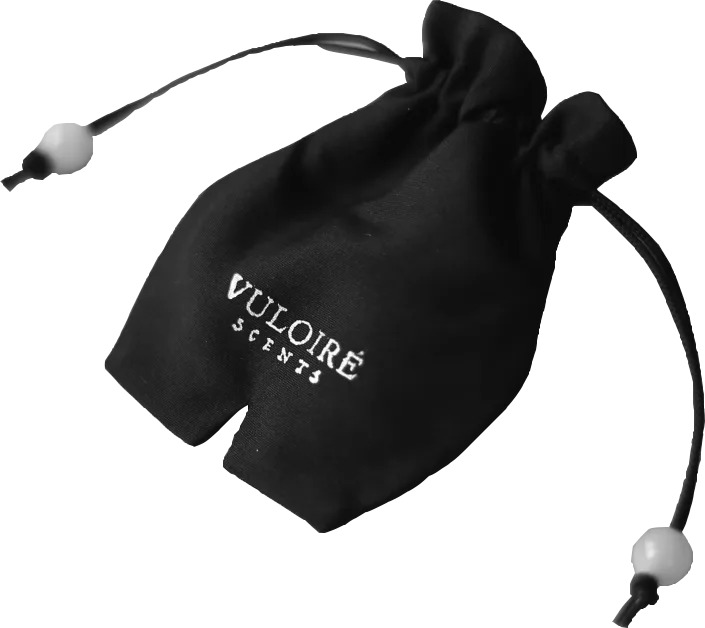
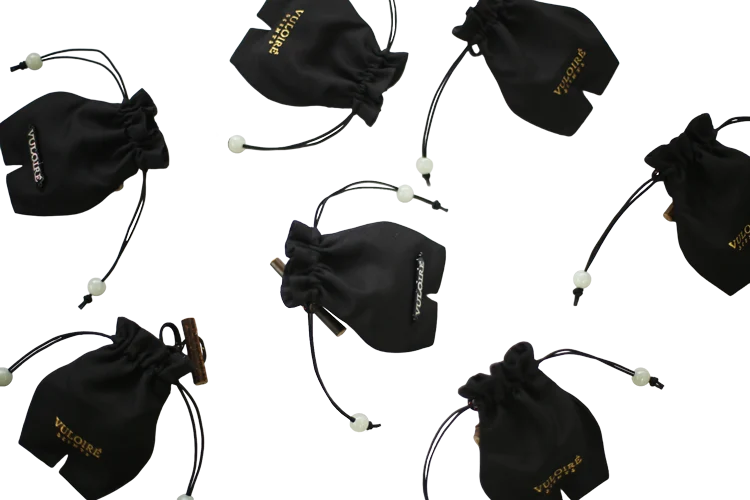
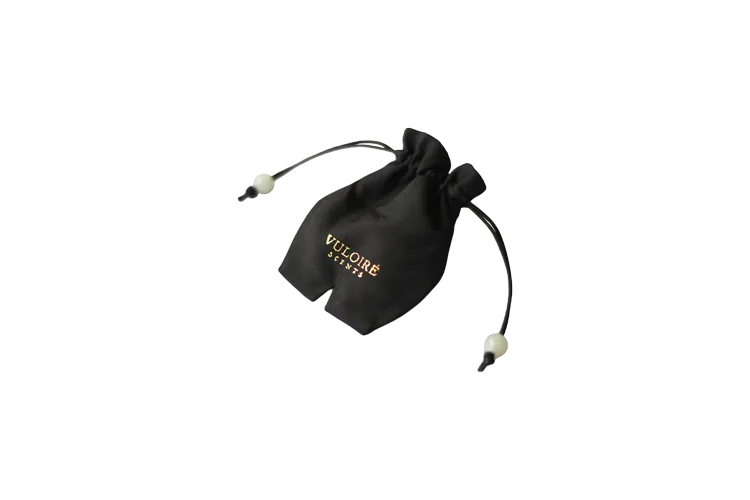
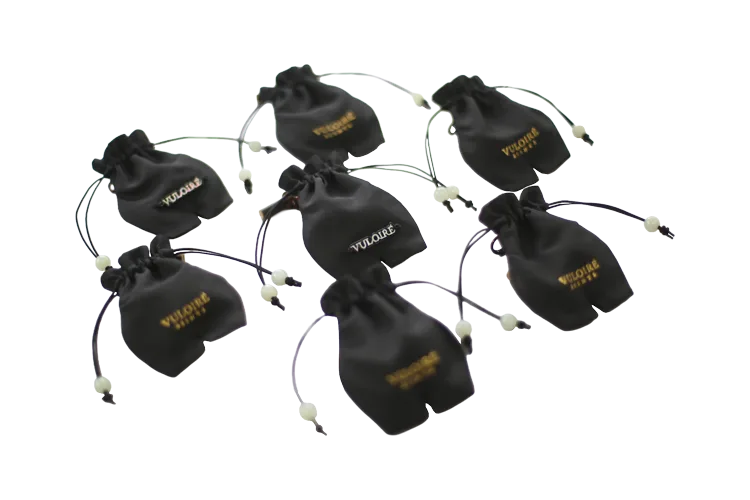
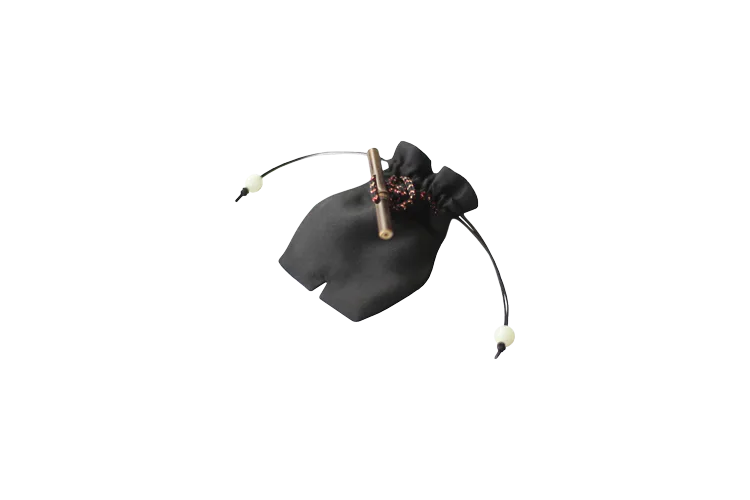
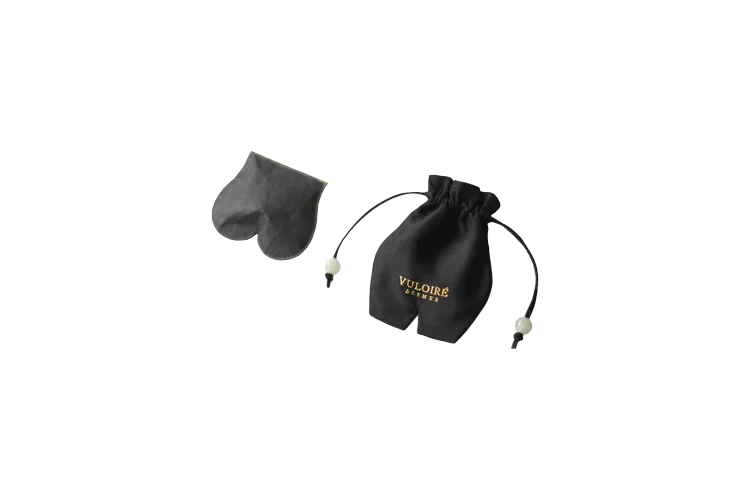
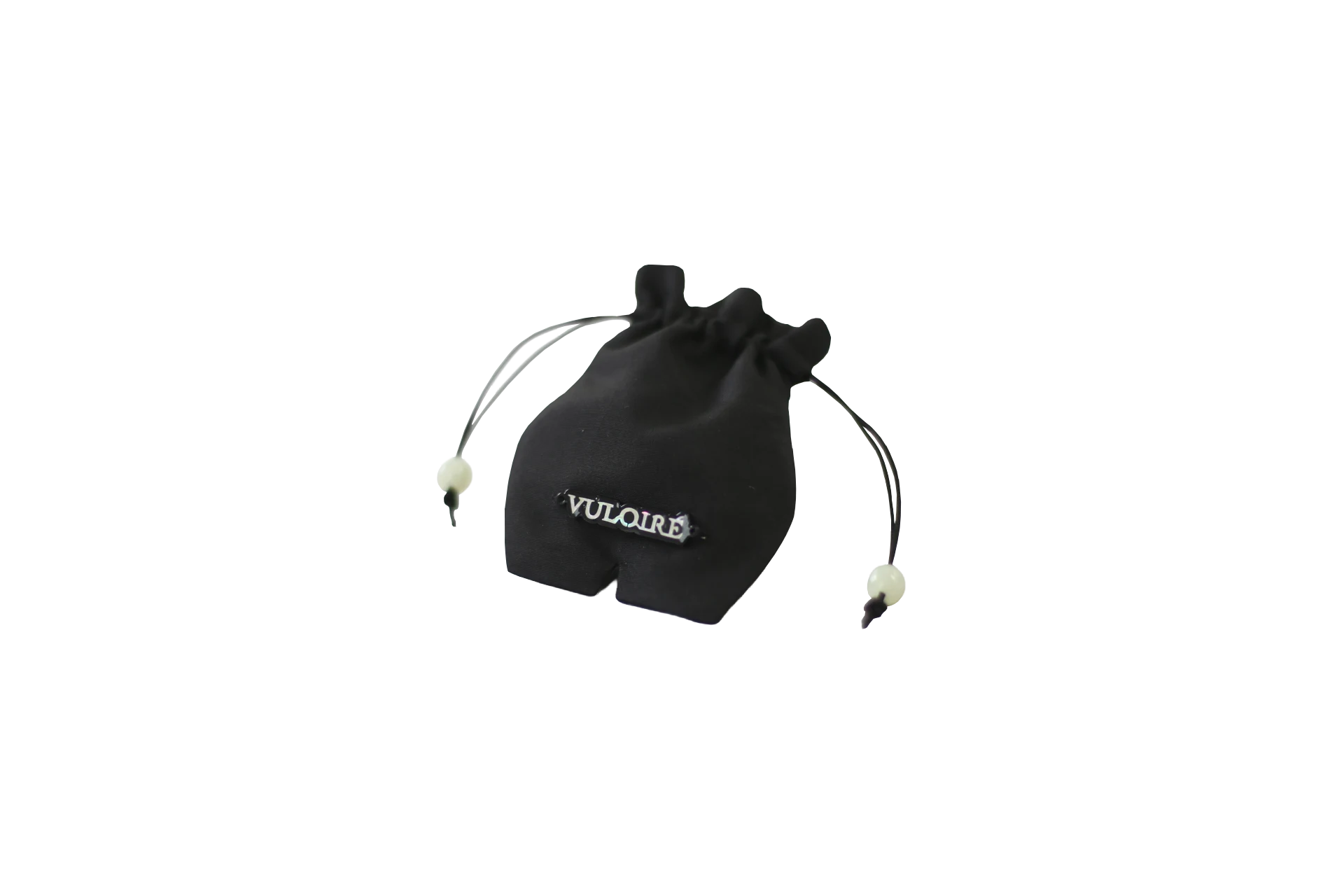
The scent pouches are designed as a reinterpretation of traditional Korean fortune pouches—bokjumeoni—with a sensual modern twist. Traditionally in Korea, you carry your scent instead of spraying on your skin. By following the tradition, Vuloiré’s scent pouches redefine what “wearing” your scent means.
The pouch is an ensemble of black hanbok silk, hanji (Korean mulberry bark paper), genuine jade, and black bamboo, finished with a dorae knot. Each material is selected not only for its sensory quality, but for its cultural lineage.
The jade bead is carved from Chuncheon jade, Korea’s sole natural source of white jade. Historically reserved for objects of protection and restraint, white jade was valued not for brilliance but for its quiet luminosity and moral symbolism—purity, integrity, and calm authority. Traditionally, jade was also believed to possess the power of byeoksa, warding off negative forces and misfortune, which is why it was often carried on the body or attached to personal objects rather than displayed. Its presence lends the pouch a weight that is felt rather than seen.
The scent itself is housed in hanji-wrapped refills. Made from mulberry tree bark fiber, hanji is renowned for its exceptional durability and breathability, with historical records attesting to its ability to endure for centuries. Traditionally used for royal documents, Buddhist sutras, and architectural elements, hanji allows the fragrance to diffuse gently over time, transforming scent into something carried and lived with rather than applied.At the end of each silk string sits a dorae knot, traditionally used to secure objects meant to be opened and closed repeatedly without weakening. In Korean tradition, all traditional pouches begin by threading the cord and forming a dorae knot, as it serves both as the point of origin and the method of closure. The dorae is also the knot most commonly used to finish both the beginning and the end of decorative knotwork, giving structural integrity and continuity to the form.The strings are produced using a household-owned knotting machine belonging to a decorative knotting Master’s family—an apparatus that operates only in conjunction with the human hand. Threads are continuously fed and guided by the artisan, a process comparable to French Leavers lace production, where mechanical precision and human judgment coexist, producing results unattainable by automation alone.The black bamboo element at the back of the pouch is crafted from bamboo that has been naturally matured over three decades, allowing its color to deepen and its surface to become exceptionally smooth. This prolonged maturation results in a tactile quality and density that cannot be replicated through accelerated treatment.
The pouch is offered in two versions. One features mother-of-pearl, revealing its natural iridescence through movement and light. The other is a limited edition finished with hand-applied gold leaf by Kim Giho, National Intangible Cultural Heritage Grand Master specializing in Gold Leaf Imprinting. This process involves applying adhesive to the silk, delicately hammering sheets of gold leaf into place, and sealing the surface with traditional Korean yellow lacquer (hwangchil) using a fine brush—an exacting technique historically reserved for royal garments and ceremonial objects.
Through material, process, and restraint, the scent pouch redefines what it means to wear fragrance: not applied to the body, but carried—quietly, intimately, and with intention.
The blue peony is an imagined flower rooted in Korean visual tradition, appearing in embroidery and paintings as a symbol of riches and honor—buguiyounghwa. Conceived as Vuloiré’s first signature scent, Blue Peony marks the maison’s debut as a heritage design house, translating a symbolic motif into an olfactory form.